
Top Story
OPINION: They Study Here, Build Here and Dream Here, but Many Aren’t Sure They Can Stay
For international students, the pressure of H-1B uncertainty begins long before graduation
By Yuki Liu
Correspondent
The Carrboro Defender
On this Mother's Day weekend, freshly-minted graduates at UNC-Chapel Hill, Duke University and N.C. State are walking across stages, turning tassels, and celebrating with friends and family the culmination of four years of hard work. But for international students, a big question looms over the festivities: Will I be allowed to stay in the United States?
International students face the same life questions as American-born students: What’s next? Where will I work? What kind of life do I want to build?
But the difference for students born outside the United States is the high level of uncertainty about immigration status in the wake of the Trump administration’s executive orders over the past 16 months.
President Donald Trump issued an executive order in January 2025 that enabled the revocation of international student visas based on previously protected speech. Executive Order 14161, which expanded grounds for visa revocation based on broad national interest criteria, combined with a proposal by the Department of Homeland Security to end the “duration of status” policy, which allows students to stay for the length of their studies, has only added to the stressors experienced by foreign students studying in the United States.
The proposed DHS rule imposes a four-year limit on international students, requiring them to apply for extensions through U.S. Citizenship and Immigration Services, increasing monitoring and vetting, according to the Higher Ed Immigration Portal website.
Uncertainty of immigration status shapes college life long before international students graduate and enter the job market. It arrives in the form of routine emails from international student services warning that a Form I-20, otherwise known as a Certificate of Eligibility for Nonimmigrant Student Status, is nearing expiration. It shows up in reminders about status requirements, paperwork deadlines and rules that can quietly determine whether a student can remain in the country.
For many international students, those notices do not feel routine. They feel like a countdown.
Later, that pressure hardens into something larger: the challenge of finding work in a system where long-term stability often depends on employer sponsorship and the H-1B visa process. By then, the stress is no longer just administrative. It has already shaped how students think about school, ambition and the limits of their futures.
Three international students attending UNC-Chapel Hill and Duke University recently shared their stories with The Carrboro Defender, describing how uncertainty about their immigration status follows them into some of the most important decisions of their lives: graduate school, applications and whether it makes sense to imagine a career in the United States at all.
The Carrboro Defender reached out to UNC-Chapel Hill’s International Student and Scholar Services [ISSS] to better understand how the school advises international students navigating their non-immigrant visa status, optional practical training —temporary employment directly related to major area of study — and post-graduation uncertainty.
UNC International Student Adviser Hayley Weiner stated via email, “Unfortunately, ISSS is unable to participate in interviews or provide commentary at this time.”
The students who agreed to speak to The Carrboro Defender expressed unique individual concerns, but together, they point to a common reality. For international students, the pressure of H-1B uncertainty is rarely just about one visa category or one deadline. It is a condition of living in the United States on temporary status, where years of work can still end with instability.
Sophia Shin, a junior at UNC from Korea, said the pressure has made academic success feel less secure than it should.
“I feel like I have to work harder just to be seen at the same level,” she said. “Sometimes it feels like someone with a similar GPA, but a green card would have a much easier path, even if I’ve done more academically.”
Sophia’s anxiety is not rooted only in whether she will gain acceptance to her first-choice law school. Her unease centers on what happens after she earns a juris doctorate degree — which is in itself an enormous financial and personal commitment — but for international students, it can feel like an even riskier investment because an advanced degree does not guarantee the right to stay and build a career in the United States.
The stressors and added pressures international students face ultimately change the emotional meaning of “achievement.” A strong GPA, internships and leadership experience are supposed to signal opportunity. But for students like Sophia, they can also intensify the fear of losing what they have worked for. Success does not remove the uncertainty. It raises the stakes of it, she told The Carrboro Defender.
Kellie Bland, assistant director of international admissions at Elon University, said international students play an important role in shaping campus life and institutional reputation, though the exact impact depends on each school’s priorities. Bland is an Elon alumna who returned to the university as a staff member in December, and her work focuses on international admissions and prospective international students.
“It really depends on the priorities of the institution,” Bland said, “At Elon, international students are an important part of building a globally engaged and diverse campus community. They bring different perspectives into the classroom and help prepare all students for a global workforce.”
Bland added that international enrollment can also shape how universities are perceived beyond their own campuses.
“More broadly, universities that attract international students are often viewed as more competitive and globally connected, which strengthens their overall reputation,” Bland said.
The economic impact of restrictions on international students
NAFSA, or the Association of International Educators, estimated that international students studying at U.S. colleges and universities contributed $42.9 billion and supported 355,736 jobs in the U.S. economy during the 2024-25 academic year. NAFSA said those contributions come from spending in sectors including higher education, housing, dining, retail, transportation, telecommunications and health insurance.
Enid Wang, an international student from China currently attending UNC-Chapel Hill, said her immigration status remains in the back of her mind with every application she submits.
“When I think about applying, I can’t separate it from the fact that I’m international,” she said. “There’s always an extra layer of concern about whether that will affect my future here.”
For students pursuing research careers, the timeline can feel especially fragile. A Ph.D. requires years of commitment, often without clear guarantees even for domestic students.
For international students, the calculation is even more complicated. They are not only deciding whether a program fits their academic interests. They are also thinking about whether years of training will lead to a life they are legally able to continue in the United States.
What should feel like intellectual possibility has now begun to feel like a gigantic mystery.
Bland said uncertainty around OPT and H-1B pathways could have consequences for U.S. higher education, especially for schools that enroll larger numbers of international students.
“If international students become less willing to study in the United States due to uncertainty around OPT or H-1B pathways, the impact on higher education could be significant—especially for institutions that enroll larger international populations,” Bland said. “At those schools, even a modest decline in interest could lead to noticeable decreases in enrollment.”
Bland added the potential loss would not only be numerical or financial.
“Beyond enrollment numbers, institutions could also lose the global perspectives that international students bring to campus, which enrich classroom discussions and contribute to a more globally engaged learning environment,” Bland said. “At the same time, it’s important to note that not all international students come to the U.S. with the goal of remaining here after graduation. Many intend to return to their home countries and apply what they’ve learned.”
Claire Yang, an international student from China attending Duke University, said the reality of permanent uncertainty has forced her to imagine a different life after graduation.
Claire’s story reflects a common thread among international students attending UNC-Chapel Hill and Duke who spoke to The Carrboro Defender.
Sophia and Claire both described how their burden is not only logistical, but emotional and cumulative. They said it can be difficult to explain their struggles to people who have never had to plan a life around legal uncertainty.
It is the strain of doing everything the university asks of you while knowing that performance alone may not be enough. It is the experience of excelling in school while watching classmates make long-term plans with a sense of stability you do not have. It is the quiet realization that your future may depend not just on talent or effort, but on sponsorship decisions, immigration rules and a policy system that seems permanently in flux.
That pressure can reshape ambition before students even realize it. Some choose fields they believe are more practical for sponsorship. Some hesitate to invest in graduate or professional school because the future feels too unstable to justify the cost. Some begin thinking about leaving not because they lack commitment, but because uncertainty itself becomes exhausting.
In public debate, H-1B policy is often discussed through the language of labor markets, workforce needs and economic competition. On campuses, its effects are far more intimate. They are felt in the private calculations students make when choosing majors, applying for internships or deciding whether to pursue another degree. They are felt in the fear that even a carefully built future may still depend on luck.
Yet the issue also reaches beyond individual students. Bland said many international applicants compare the United States with other countries, including Canada, the United Kingdom and Australia, when considering where to study.
“Many international applicants compare the United States with other countries like Canada, the U.K., and Australia when considering their options,” Bland said. “Students who are interested in studying abroad typically take time to research not just individual institutions, but also the broader context of each country.”
She said students often evaluate more than the reputation of a single university.
“They often evaluate factors such as academic programs, likelihood of admission, cost, visa policies, and post-graduation opportunities,” Bland said. “Ultimately, students are looking for the best overall fit, both in terms of the university itself and the opportunities available in that country.”
That means uncertainty around post-graduation work pathways does not exist in a vacuum. It can shape how students and families evaluate the United States against competing destinations. For American universities, the risk is not only that individual students feel anxious. It is that the U.S. higher education system may become less attractive to global talent.
That fear does not begin at graduation. It begins much earlier, in the daily discipline of maintaining status.
As an international student from China, I personally understand what it feels like to receive emails from ISSS at UNC-Chapel Hill reminding me that a Form I-20 is expiring or that action is needed to maintain legal status.
Messages like those may read as administrative on the surface, but to students they often feel heavier than that. They are reminders that even the most ordinary routines of college life exist beside a second set of rules, one that can interrupt everything if a deadline is missed or the next step does not work out.
For many students, that feeling lingers constantly, like the proverbial Sword of Damocles dangling above their heads.
Even while they are studying for exams, preparing applications and trying to imagine adulthood, there is the knowledge that their right to remain in the country is never fully secure.
Universities celebrate international students as part of a global campus. They recruit them, praise their academic contributions and encourage them to see higher education in the United States as a pathway to opportunity. Many international students arrive believing that if they study hard, build experience and make the most of those opportunities, they will earn the chance to stay and contribute.
Bland said international students contribute to U.S. campuses in many ways beyond tuition.
“International students contribute to U.S. campuses in many ways beyond tuition,” Bland said. “One of the most significant impacts is the global perspective they bring, which enriches classroom discussions and helps foster a more inclusive and internationally aware learning environment.”
She also said international students contribute through academic and campus life, while also taking what they learn in the United States back into the world.
“They also contribute through academic programs, research, and campus involvement, often bringing different approaches to problem-solving and collaboration,” Bland said. “At the same time, international students often gain new perspectives and skills during their time in the U.S. that they can take back to their home countries, creating a meaningful exchange of ideas and knowledge.”
But international students who spoke to The Carrboro Defender described a more fragile reality. The system waiting after college does not reward effort in a straightforward way.
It rewards timing, employer willingness, legal categories and chance. For students who have already spent years proving themselves, that can feel like a betrayal of the promise that hard work leads somewhere stable.
Sophia Shin worries that merit may not be enough. Enid Wang cannot separate her academic future from immigration uncertainty. Claire Yang has already started imagining departure from the United States as a practical necessity rather than a free choice.
Their experiences differ in detail, but they converge around the same unspoken question: What does it mean to build a life in a place that may not let you keep it?
That question is not abstract. It lives in inboxes, in applications, in career fairs and in late-night conversations with friends who are trying to calculate what is realistic. It lives in the hesitation before committing to a profession, a city or a future that may never fully be theirs to claim.
Bland said the United States could lose more than enrollment if fewer international students choose to study here.
“If fewer international students choose to study in the United States, the country could lose valuable global perspectives and the diversity of thought that strengthens both campuses and communities,” Bland said. “International students often bring fresh insights shaped by their own cultural, academic, and social experiences, which can challenge assumptions and spark new ways of thinking.”
Without that exchange, Bland said, U.S. institutions may lose part of what helps them think globally.
“Without that input, U.S. institutions may miss opportunities for creative problem-solving and cross-cultural understanding,” Bland said. “Losing this could impact not only higher education, but also how the U.S. engages with the global community.”
For students, that loss is personal. For universities, it is academic and institutional. For the United States, it may also be strategic: a weakening of the country’s ability to attract, educate and retain people who have already invested years of their lives in American classrooms.
International students come to the United States to study, to compete and to contribute. Many do exactly what they are told will open doors: they earn strong grades, pursue research, take on internships and plan carefully for what comes next. But for many of them, the hardest part is discovering that doing everything right still may not be enough to make the future feel secure.
“I’ve seriously thought about going back to China,” Claire Yang told The Carrboro Defender. “Not because that was my first choice, but because staying here feels so hard.”

Sophia Shin, an international student from Korea studying at UNC-Chapel Hill, said living in the U.S. on an F-1 student visa makes it feel like academic success is not enough to secure a stable future after graduation. Submitted photo

Enid Wang, an international student from China studying at UNC-Chapel Hill, said her dream of pursuing a career in research all hinges on immigration policies beyond her control, which creates additional stress with each new graduate school application. Submitted photo
Crisis of leadership on the Hill
As UNC-Chapel Hill plans the elimination six area studies centers, students express skepticism regarding the school's motives
By Ashley Ju
Correspondent
The Carrboro Defender
Editor’s note: The name “María” is a pseudonym used at the request of a UNC-Chapel Hill student interviewed for this story who asked to remain anonymous.
CHAPEL HILL — The University of North Carolina at Chapel Hill plans to close six of its area studies centers by the end of the 2026 fiscal year as part of a broader round of budget cuts, a move that has prompted UNC students to question the rationale behind the decision in light of independent financial analyses suggesting the university remains in strong financial condition.
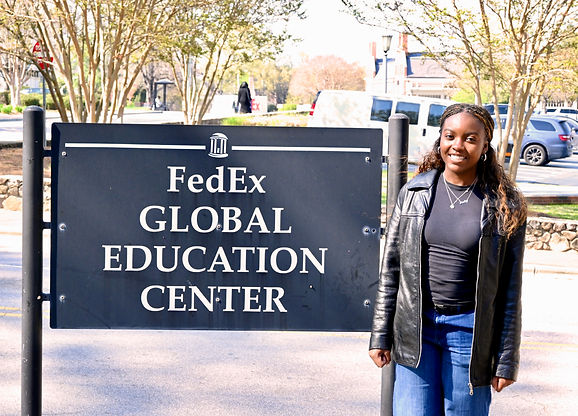
Students who spoke to The Carrboro Defender shared the sentiment that the planned closures of the Center for European Studies, African Studies Center, Carolina Asia Center, Center for Middle East and Islamic Studies, Institute for the Study of the Americas and the Center for Slavic, Eurasian and East European Studies could limit study abroad opportunities, reduce funding for international research, weaken cultural and academic communities that connect global diasporas on campus, and undermine UNC’s reputation for international scholarship — which could adversely impact the number of international student applications going forward.
The closures come amid ongoing debates in North Carolina and across the United States over diversity initiatives and the funding of cultural and international programs at universities. In recent years, public universities in North Carolina and across the country have faced increasing scrutiny from state legislatures and governing boards over diversity-related initiatives and internationally focused programs.
Hailey Desir, a UNC junior majoring in global studies, criticized UNC's recent decision to pause the Phillips Ambassadors Scholarship program for Fall 2026. Founded in 2007 by UNC alumnus Ambassador Earl N. “Phil” Phillips Jr., the scholarship financially supports UNC undergraduates who wish to study abroad in Asia.
Photo credit: Ashley Ju

Erin Kim, a UNC student leader involved in Asian American student organizations, stands in front of the Carolina Asia Center at the University of North Carolina at Chapel Hill. Kim said the center has served as an important cultural space that fosters community and connection among students.
Photo credit: Ashley Ju
Eliminating the six area studies centers is projected to save about $7 million, according to university budget planning discussions. However, an independent financial audit conducted in November 2025 found that UNC remains in strong financial condition, raising questions among some students and campus groups about whether cuts of that scale are really necessary.
In a letter sent to faculty and staff on January 28, James W.C. White, Dean of the College of Arts and Sciences, described the closures as “part of a broader package of budget cuts affecting many centers and institutes across campus.”
In his letter, White referenced the roughly $70 million budget reduction plan announced by UNC leadership in July 2025 in response to potential declines in research funding and broader financial pressures facing higher education.
University leadership plans to integrate many of the centers’ activities into existing Global Studies and Global Programs structures in an effort to preserve certain academic programs, speaker series and travel opportunities, White stated.
On January 29, the UNC Faculty Council expressed its strong opposition to the proposal to dismantle the six area studies centers by adopting a resolution urging University leadership, “not to close, sunset, decommission, or otherwise dismantle the centers and rather to preserve these essential centers,” according to The Daily Tar Heel.
Students openly question UNC's "why"
An independent audit conducted by Eastern Michigan University accounting professor Howard Bunsis, commissioned by the Workers Union at UNC, the UNC-Chapel Hill chapter of the American Association of University Professors and TransparUNCy, found that UNC currently holds approximately $10 billion in total assets, $5.6 billion in cash and $1.9 billion in unrestricted reserves.
The report also found that university cash and investments grew by $3.5 billion between 2015 and 2025, while institutional debt did not increase.
Bunsis said UNC’s financial indicators suggest the university is in “excellent financial condition,” noting that the university takes in more revenue than it spends and maintains a AAA bond rating — the highest credit rating possible.
María, a UNC graduate student involved in Latin American research and community organizing, said the independent audit findings raise questions about the University’s motives.
“This leaves students to believe that this decision may be more of a political decision than financial, as they are trying to make it look like,” she said.
UNC students told The Carrboro Defender the presence of area studies centers on the historic campus has historically signaled the university’s commitment to global engagement and cultural exchange, but that perception of the University as a welcoming place for international students is rapidly changing among the 46,000 members of the University community.
“Having these centers on campus is the university’s testament to having diversity and inclusion in the first place,” said Erin Kim, a student leader involved in Asian American student organizations.
“So I think even if they are not directly saying it, the closing of the funding and these centers says a lot about where the university is putting their priorities.”
Resources at risk
Students interviewed by The Carrboro Defender shared the sentiment that the planned closures of area studies centers could significantly impact how they study the world, particularly through study abroad programs.
For example, the Phillips Ambassadors Scholarship, a program operated through the Carolina Asia Center in collaboration with UNC’s Study Abroad Office, has already been paused for the upcoming fall semester. The program historically funded undergraduate study abroad in Asia.
Hailey Desir, a UNC student involved in global studies programs who studied abroad during her first year of college, said programs like this are exactly the kinds of opportunities area studies centers help make possible.
“There are definitely resources for people to study abroad, and I wish everyone could have those same resources and experiences,” Desir said.
María said the Institute for the Study of the Americas has long supported Latine students pursuing international research and language study.
“The Institute for the Study of the Americas has been a staple in supporting Latine students with research grants, travel funding and resources for studying languages,” she said. “So I think losing that infrastructure will affect who gets to do their research, who gets to travel and who feels their stories and origins matter at UNC.”
Cultural Spaces and Community Connections
Beyond academic funding, students say the centers have also served as cultural gathering spaces that foster community across campus.
For many students, these spaces provide a sense of belonging and connection during a time of growing political polarization on college campuses.
“The Asian American Center definitely did a lot to bring these different Asian diasporas together,” said Kim.
She also emphasized the importance of having physical spaces where students could gather in fellowship.
“It was a place where Asian students could go to find peace and an oasis even during this polarizing time,” Kim said. “Not having access to this physical space and the events anymore, I think is the biggest loss.”
Kim said lectures, cultural celebrations and visiting scholars hosted by the centers also exposed the broader campus community to global perspectives that might otherwise receive less attention in traditional academic departments.
Concerns About UNC’s Global Future
UNC students interviewed by The Carrboro Defender shared the concern that the closures may also affect UNC’s reputation as a university known for international engagement.
María said there is a risk that reducing institutional support for regional expertise could narrow the scope of global scholarship on campus.
“There’s a risk that international work at UNC will become more insular and less rigorous,” she said.
For students planning careers in diplomacy or international development, the closures have also raised questions about future opportunities.
Desir said UNC’s strong global studies programs and study abroad connections were a major reason she chose to attend the university.
“A lot of people I talk to came to UNC because of the global studies program, because of their strong connections to study abroad and because of their support,” Desir said.
Without those resources, she worries UNC could become less appealing to prospective students interested in international careers.
“Could it deter people from coming to UNC? If I’m being completely honest, yes,” she added.
Global studies majors often structure their coursework around specific world regions and the academic centers associated with them.
Desir went on to say that when a UNC student chooses an area of study, they must choose a specific part of the world to focus on, which determines their area study center.
“I am worried for the future of global studies students,” she said. “Will this be a major that still exists in the same way?” Desir asked rhetorically.
Moment of UNCertainty
For many UNC students, the closures of on-campus cultural centers reflect a broader uncertainty surrounding international engagement and global policy careers, and could harm countless students at the oldest public university in America.
Students like Desir believe the loss of these centers could reshape UNC’s identity as a globally engaged university.
“This is a topic that is deserving of funding,” Desir said. “It leaves a lot of uncertainty for the future.”
University officials have promised that more details will be forthcoming later this year regarding how existing programs will be integrated into other departments.
In the meantime, UNC students who spoke to The Carrboro Defender all expressed concern about the long-term effects of this unprecedented move by the Board of Trustees to campus culture, including academic opportunities and UNC’s global engagement.
Desir referenced the bigger picture aspect of the proposed cuts to area studies centers — specifically the Trump administration’s assault on education and series of failures in international diplomacy — have already caused some UNC students to reconsider their future plans.
“These centers closing down has reaffirmed that this career path, as of now, is not sustainable,” she said.

North Carolina politics
Feeling Blue - Part 1:
Youth movement reinvigorates NC Democratic Party; Dems seek to build upon historic victories heading into 2026
By Keith T. Barber
Editor-in-Chief
The Carrboro Defender
Editor’s note: The following story is the first in a series focused on the NC Democratic Party’s efforts to turn the state blue in 2026.
For UNC-Chapel Hill senior Nick Willets, his road to political activism began on August 28, 2023. On that day, Tailei Qi, a 34-year-old graduate student, allegedly shot and killed Prof. Zijie Yan, 40, inside the Caudill Laboratories building on the historic campus, sending the campus into lockdown for three hours.
“I just remember being fearful, shocked and scared that this was happening on our campus,” Willets said. “Growing up in this generation where you’ve seen school shooting after school shooting, I was like, ‘It won’t happen to me,’ and here I am, my first week at Carolina.”
Sloan Duvall, a recent UNC graduate and former president of the UNC Young Democrats, said her fear and terror on that fateful day quickly turned into steely resolve.
“I think very rapidly, as that day progressed, myself and other student activists on campus really jumped into action thinking, ‘What can we do to give students an outlet to express their anger over this situation,’” Duvall recalled. “We wanted to kind of move beyond thoughts and prayers and turn that into action almost immediately after this terrible event happened on our campus.”
Transforming outrage into action
UNC Young Democrats joined Students Demand Action to organize a rally just two days after the on-campus tragedy. The event featured an impressive lineup of speakers including David Hogg, Vice Chairman of the Democratic National Committee and founder of March for Our Lives; Anderson Clayton, chair of the NC Democratic Party; NC Sen. Graig Meyer; and NC Rep. Allen Buansi.
Willets joined more than 600 students, faculty and UNC staff members gathered on the steps of South Building in late August, and it marked a turning point in his life.
“I’ve never been politically involved before but when I heard Rep. Allen Buansi and Sen. Graig Meyer would be speaking, I was like, ‘This could be a cool opportunity to meet some people,’ so I went and checked it out,” Willets told The Carrboro Defender. “And I actually ended up joining UNC Young Democrats because of that rally, and got super involved in it, and then somehow became president of it.”
Duvall said the message UNC students sent to lawmakers in the NC General Assembly that day was simple and straightforward: “Enough is enough.”
UNC students began to connect the dots between the actions of elected representatives in Raleigh that have paved the way for almost anyone to get their hands on a Glock 9mm handgun like the kind allegedly used by Tailei Qi to murder Prof. Zijie Yan, Duvall said.
“This [tragedy] had come just a few months after our North Carolina legislature had repealed the pistol permit purchase requirement [Senate Bill 41], and then to have a direct consequence of that action occur on our campus, was really powerful for students to make the connection between what had happened to us and real decisions that were being made in our state government,” she added.
Under North Carolina law, there would’ve been no way for Tailei Qi, an international student in the United States on a non-immigrant visa, to legally purchase or possess a handgun at the time of Prof. Zijie Yan’s murder even after Republicans overrode then-Gov. Roy Cooper’s veto of Senate Bill 41. However, Qi could have acquired the Glock 9mm handgun via an illegal straw purchase or bought the handgun from a private seller in violation of state law.
Indifference of lawmakers in Raleigh
Ashley Ju, a UNC junior studying public policy who serves as president of Students Demand Action, said the aftermath of the on-campus tragedy made it clear the NC GOP isn’t listening to the voices of UNC students, and politicians in Raleigh don't actually care about the safety and well-being of the 46,000 members of the University community.
Ju helped organize a rally at the NC General Assembly two weeks after the murder of Prof. Zijie Yan. UNC students called upon lawmakers to pass common-sense gun laws that protect all North Carolina residents but were met with indifference and contempt. UNC students gathered in the gallery of the NC House and chanted, “Vote them out!" Student protestors were quickly escorted out of the chamber by the NCGA Police, as then-Speaker of the House Tim Moore reportedly made light of the situation, chiding the students by stating, “This isn’t a pep rally. This is the House of Representatives.”
Days after the rally in Raleigh, Mickel Deonte Harris allegedly confronted an employee at the Alpine Bagel shop inside the Frank Porter Graham Student Union on the UNC campus by brandishing a firearm in full view of dozens of Carolina students, sending the campus into yet another lockdown. According to court records, Harris, who has no affiliation with UNC-Chapel Hill, had an existing arrest warrant and a lengthy criminal history at the time of the incident.
“I just remember that within those two weeks [between lockdowns], I was doing as much as I could do — talking to state representatives, rallying students, and I remember so many times, state legislators laughing in our face," Ju said. “So the second incident made me so angry, because I thought, ‘There’s no wonder this keeps happening. It’s because politicians aren’t doing anything about it.’”
Reason for hope
Despite the recent spate of gun violence on college campuses across the nation in recent years, the collective outrage of young people has not yet translated into a significant increase in their collective level of civic engagement.
A 2025 study authored by the Center for Information and Research on Civic Learning and Engagement at Tufts University estimated the national turnout rate for voters ages 18 to 29 actually dropped from the 2020 presidential election to the 2024 presidential election.
However, the 47% youth voter turnout in 2024 represents a marked improvement from the 2016 presidential election, when only 39% of young people nationally cast ballots in the presidential race.
According to the study, youth voter turnout in North Carolina in the 2024 presidential election roughly equaled the 2020 turnout rate — around 50% of 18 to 29-year-olds in the state cast their ballots in 2024, but only 51% of young voters supported Democratic nominee Kamala Harris, while 46% of the state’s young voters supported Donald Trump. The 5-point margin marks a significant drop from President Joe Biden’s 16-point margin over Donald Trump among North Carolina's young voters in 2020.
Last month, however, North Carolina Democrats received a huge boost during the November 4 elections.
“We were really excited to see the Democratic sweep that we had — not just in places like Virginia and New Jersey, but amazing victories for Democrats in North Carolina, too,” Anderson Clayton, chair of the NC Democratic Party, told The Carrboro Defender.
North Carolina Democrats enjoyed historic wins in the more than 550 cities, towns and villages across the state on November 4, 2025. Still, voter participation for the off-year election was less than ideal. According to the NC State Board of Elections, only 19.75% of voters registered in municipalities with elections on November 4 exercised their franchise.
Despite relatively low voter turnout numbers, there was much for North Carolina Democrats to celebrate, including a burgeoning youth movement within its party ranks.
Fresh voices
“We brought down the average age of our State Executive Committee, which I think is exciting, but I’ve definitely seen a lot of young people step up to run for office, and I think it’s just because they’re motivated by what they’re seeing across our state — Republicans who have refused to fully fund our public schools that are now attacking higher education,” Clayton said.
The State Executive Committee [SEC] is the primary governing body of the NC Democratic Party, responsible for making top-level decisions at the state level.
Clayton, 27, holds the distinction of being the youngest Democratic Party chair in the nation.
“I’m encouraged by both the county party chairs and the precinct chairs who are young and have stepped up, and also the young folks who are running for office,” Clayton said.
Clayton cited the success stories of NC Rep. Dante Pittman, 29, a Democrat from Wilson County, who was elected last year, and NC Rep. Jordan Lopez, a Democrat from Mecklenburg County, who was elected to the NC House Of Representatives at the age of 27, as proof that there is a growing youth movement within the party.
Emerson Kirby, chair of the Durham County Democrats is a reflection of the Democratic Party leaning heavily into the youth vote. A 2024 graduate of Duke University, Kirby enjoys the distinction of being one of the youngest county party chairs in North Carolina at 24 years of age.
“Young people are definitely starting to plug in more,” Kirby said. “One thing that I hope to do as chair is show young people that they can take on not just a role, but a leadership role to help shape their local party, which shapes the state party and ultimately, the national party.”
Lynn McGee, chair of the Orange County Democrats, said the focal point for her organization has been to move beyond voter registration drives on the UNC campus, and instead engage in a robust dialogue with young voters to encourage them to run for elected office in Orange County and beyond.
“If we can carry that torch for the Democratic Party by educating these young candidates on how the Democratic Party can support them with access to Votebuilder, teach them how to canvas effectively — as long as they have the passion and the willingness to work, we can connect them with the right resources,” McGee said.
Down Home NC, a community organizing group that focuses on rural areas of North Carolina including Alamance County, has created a candidate training program to help identify leaders residing in small towns across the state, providing individuals with knowledge and encouragement on how to be effective leaders in their own communities.
“We take them through trainings — how to do fundraising, how to canvas, and how to show up as a viable candidate who will stand out when they ultimately run for their positions,” said Tai Coates-Wedde, communications director for Down Home NC.
Down Home NC also enjoyed a number of success stories on November 4, 2025. Graduates of their candidate academy included Democrat Beth Kennett, who was elected mayor of Burlington; Democrat Ian Baltutis, who was elected to the Burlington City Council, and Isaac Davis, who became the first Black person ever to win a seat on the Midland Town Council.
The North Carolina Democratic Party provides significant resources and support for Democrats who are running for the first time, regardless of age, Clayton said.
“We’ve got 25 full-time staff members, which means we’ve got seven that are year-round organizers,” she said. “My field organizers will help make a field plan for folks that are running with the party, and anybody else that needs a website or digital support, the party will do that for them, too, so it’s been exciting to see that growth.”
The path to victory in 2026
Democrat Barbara Foushee won a second term as Mayor of Carrboro on November 4. Foushee, the first Black woman to serve as Carrboro’s mayor, said she’s heartened by the infusion of fresh voices but believes party unity remains the key to turning the state blue in 2026.
“It’s great that we have young people like Anderson Clayton, but it’s really is going to take a multilayered approach, and sticking together here in North Carolina and not being fractured,” Foushee said. “We have this new energy at the top of the party and Anderson has been influential, particularly among young people, which we need — but it’s going to take all of us.”
Clayton said she and her 25 staff members have heeded the call for unity by not suppressing dialogue within the party.
“I think a lot of times our party wants to control the narrative, and I think that right now we need ‘small D’ democracy in every way,” Clayton said.
“ I've tried to make it so that the party is accessible — many times the critique [is] we put a thumb on the scale, and I'm really trying to tell people, ‘'No actually, I want to make sure everybody can run,’ which is why we give out free Votebuilder access to anybody that's running for office. It's trying to democratize data and actually level the playing field and how the party can help support anybody who is willing to run for office to actually get there.”
NC Rep. Graig Meyer, a Democrat who represents parts of Orange, Caswell and Person counties, said the benefits of the recent influx of youthful energy and enthusiasm is a very specific skill set and intuition around messaging and social media platforms.
Meyer launched Beacon Media in 2024 to address news and information deserts in North Carolina’s rural areas, and his weekly Substack posts routinely receive up to 100,000 views.
“There was a point in time where I was one of the main voices from the [North Carolina] General Assembly Democrats on various platforms — Twitter, Facebook, and the social media of the day, and at this point, I’ve been surpassed by people who are sometimes a little younger, a little more nimble than me and using formats like the vertical video format that dominates most of social media channels right now,” he said.
Elections have consequences
NC Senate Bill 50, otherwise known as the "Freedom to Carry Bill," would have removed the requirement for a concealed handgun permit in North Carolina, lowering the age to carry a concealed handgun from 21 to 18. The bill also would eliminate mandatory firearms safety and training courses for gun owners. The legislature passed the bill earlier this year, but Gov. Josh Stein vetoed it, and Republicans did not have enough votes in the NC House to override Stein’s veto. However, the bill is on the legislative calendar for January 12, 2026, where it appears House Republicans will once again attempt to override Gov. Stein's veto.
Duvall cited Senate Bill 50 as a good example of how electing a Democratic governor who supports common-sense gun safety laws protects all North Carolinians, including all members of the University community.
Gun violence remains the number one cause of death for children and teenagers in the United States, and n the final analysis, it is young people who will have to become better informed and more engaged politically if they ever hope to put a stop to mass shootings on high school and college campuses, Duvall said.
“It's really up to our generation to make change happen,” she stated..
Ashley Ju cited the December 13 mass shooting that unfolded on the Brown University campus that left two people dead and 9 people injured as a stark reminder that gun violence on college campuses will not abate until our elected leaders take decisive action. Therefore, it’s imperative she and her fellow UNC students do not get discouraged, but persist.
“Classmates will say, ‘Oh, I do care about this issue deeply, but it’s hard to get involved and stay active,’” Ju said. “And even for me, I get burned out pretty frequently — it’s one of those things where I care so deeply about it, but nothing is happening time and time again. So I try to remember the wins we’ve had — getting people to stay active and stay hopeful, believing that things can actually change by all of us being a voice for UNC students to keep up the fight to end gun violence.”
“All I can do is get people to care, and that alone is difficult enough," she added.

Ashley Ju, a UNC junior who serves as president of Students Demand Action, said the aftermath of the 2023 on-campus murder of Prof. Zijie Yan made it clear Republican leaders in the NC General Assembly aren't listening to the voices of young people. Photo by Keith T. Barber

A 2024 graduate of Duke University, Emerson Kirby enjoys the distinction of being one of the youngest county party chairs in North Carolina at 24 years of age. Photo courtesy of Durham County Democrats

At age 27, North Carolina Democratic Party Chair Anderson Clayton holds the distinction of being the youngest state party chair in the nation. Photo courtesy of NC Democratic Party
_____________________________________________________________________________
Exclusive Series: Democracy Cracking - Part 2
Free speech was pivotal to Democrats' sweep of the 2025 off-year elections last month, underscoring the importance of efforts to protect the First Amendment
By Michelle Rivera
International Editor
Editor’s note: The author is publishing under a pseudonym due to safety concerns for family members still residing in her home country of Venezuela.
Introduction: I have been a student of journalism for four years now. As a freshman, the members of my cohort and I studied the First Amendment of the United States Constitution, which reads as follows:
Congress shall make no law respecting an establishment of an official religion, or prohibiting the free exercise thereof; or abridging the freedom of speech, or of the press; or the right of the people peaceably to assemble, and to petition the Government for a redress of grievances.
The First Amendment makes democracy sustainable and possible. Communication lies at the heart of democracy because it allows politicians and citizens, of any ideology, to express their goals and concerns. Thanks to this right, both Democrats and Republicans were able to run campaigns and mobilize voters to protect democracy. However, when one side of politics attempts to dominate or control public communication, there can be grave consequences, as history has shown.
A Political Collapse… and a Comeback:
On November 5, 2024, millions of Americans exercised their right to vote. The next day, the results showed that a majority of Americans trusted Donald Trump to once again become president of the United States. With a clear Republican majority in both the Senate and the House of Representatives, the GOP had secured near-total control of government.
Democrats were shattered. The country appeared to hand its trust to the MAGA movement, beginning a new era for Republicans — one many feared would endanger American democracy. The Democratic Party, including its supporters, seemed lost on the new political playing field. Confidence in the party weakened, which only empowered Republicans further.
But in a historic reversal, almost exactly one year later, on November 4, 2025, three key regions elected Democratic leadership:
-
Virginia: Abigail Spanberger (Democrat) elected governor
-
New Jersey: Mikie Sherrill (Democrat) elected governor
-
New York City: Zohran Mamdani (Democrat, Democratic Socialist) elected mayor
And the good news didn’t stop there. In California, Gavin Newsom’s Proposition 50 passed, enabling Democrats to redraw the congressional map, potentially flipping House seats back to Democratic control. A year earlier, Democrats seemed directionless. But the 2025 elections proved two things:
-
They still had the ability to mobilize.
-
Voters were not satisfied with Republicans.
The Social Media Strategy That Changed Everything:
The events of last month beg the question: How did Democrats recover so quickly, from losing all three branches to winning key states?
The answer goes way beyond Republican dissatisfaction.
To sweep the elections, they needed to reach voters and mobilize them, and the strongest tool was communication. Instead of relying solely on the traditional political toolbox (TV ads, mailers, press conferences), some candidates adopted a modern strategy: social media as the campaign headquarters.
Zohran Mamdani placed digital communication at the core of his campaign, transforming a standard race into a viral grassroots movement. He rejected traditional advertising and instead built a
a campaign powered by short-form videos, culturally relevant memes, multilingual content, and direct engagement with young voters.
-
His Instagram engagement rate during June was 14× higher than his establishment opponent.
-
He used culturally specific references (like “halalflation” and lassi analogies), resonating deeply with immigrant and Gen-Z voters.
Mamdani showcased his ideas without filters, openly criticizing Trump and the current government. By crafting an authentic and relatable identity, rooted in honesty, digital fluency, and community storytelling, he created a sense of belonging and momentum that traditional campaigns simply couldn’t match.
Although he wasn’t the only Democrat using social media, his campaign became the blueprint. Even Governor Gavin Newsom leveraged social media to shape narratives and call out government actions in real time.
The Threat:
Fun fact: The New York City mayoral race this year saw the highest voter turnout since 1969, largely thanks to social-media-driven mobilization. This proves the importance of free communication, something Trump has openly tried to restrict. Since taking office in January 2025, Trump has launched multiple attacks against the free press and freedom of communication. For example:
-
He barred members of the Associated Press from White House press conferences for refusing to use the term “Gulf of America.”
-
His administration pressured Disney and ABC to suspend Jimmy Kimmel’s show after he criticized Trump and MAGA.
-
Government officials imposed new restrictions on Pentagon press coverage, expelling journalists who didn’t comply.
Trump has repeatedly tried to silence narratives that don’t favor him. And while Democrats were able to navigate these restrictions during this election cycle, past behavior shows he has no issue suppressing critical media coverage.
The question is not if he will do it again, but when.
Without a platform to communicate ideas, you don’t get historic voter turnout. You only get turnout that benefits one party.
When the media becomes one-sided and social media restricts plurality of opinion, democracy begins to crack, and dictatorship slips in through the silence.
Venezuela: A warning from my lived experience
I am from Venezuela, a country that has lived under dictatorship for nearly 30 years. I learned what freedom of expression really looks like from living in the United States and Europe, and I know the dangers that come when it’s taken away.
In Venezuela:
-
No opposition radio or television stations remain.
-
Anything posted on social media can lead to imprisonment.
-
Opposition candidates must campaign underground, often in hiding.
Even posting a message supporting democracy can make you a target. Communication isn’t just limited, it’s criminalized.
And without communication, you cannot mobilize voters. You cannot build a movement. You cannot defend democracy.
Democracy Requires Communication
If there is one thing we should take from the 2025 elections, it is this: Communication is democracy’s strongest weapon.
When communication is threatened, freedom cracks, representation disappears, and democracy dies.
Author’s Note: Throughout this series of articles, I will compare and contrast the situation of Venezuela, under authoritarian rule, with the current administration of the United States. I hope that by the end, you’ll understand the importance of democratic institutions for the survival of peace and human rights. May they serve as a letter and an encouragement to all Americans to fight for their democracy.
EXCLUSIVE SERIES:
Democracy Cracking: Part 1 -Current trajectory of American democracy parallels Venezuela's descent into authoritarian rule
By Michelle Rivera
International Editor
Editor’s note: The author is publishing under a pseudonym due to safety concerns for family members still residing in her home country of Venezuela.

Venezuelan protesters gathered in Washington, D.C., on September 28, 2024 to demand the U.S. government recognize the true results of the Venezuelan presidential election, which declared opposition candidate Edmundo González the winner, as well as the release of political prisoners. Photo by Michelle Rivera.
Introduction: I was born and raised in Venezuela — once the most prosperous nation in South America. However, at the time of my birth, Hugo Chávez was in power in Venezuela and his brutal dictatorship ruined my country’s future, violated all human rights, expropriated the truth — all to stay in power. Now, President Donald J. Trump’s MAGA movement is beginning to resemble the dictatorship that my countrymen and I have fought against for the past three decades. My hope is to share this cautionary tale with those Americans who can clearly see their democracy is currently under assault.
In the last 25 years, 8 million Venezuelans, including me, have fled in fear of being arrested or killed, or simply in search of a better life with freedom and opportunities. Thousands of people have been imprisoned and tortured for their beliefs and opinions. We have lost five elections to rigged results. Families have been torn apart, people have died from a lack of medicine, and children from starvation. But somehow, we always end up hoping…no matter how ridiculous it seems. Because no matter how many tragedies, deaths, and things are stolen from us, there is always some light that shines on us to keep fighting.
Democracy Becomes Resistance: On October 10, 2025, the Norwegian Nobel Committee awarded Maria Corina Machado the Nobel Peace Prize, “for her tireless work promoting democratic rights for the people of Venezuela and for her struggle to achieve a just and peaceful transition from dictatorship to democracy.”
Who is Maria Corina Machado? A timeline: Maria Corina Machado entered politics in 2001 when she created a non-governmental organization to ensure Venezuela held fair and democratic elections.
-
In 2004, when she proved the government wrong about the electoral results from a referendum, she was charged with treason and conspiracy.
-
In 2011, she was chosen as a deputy for the National Assembly by the state of Miranda, making her the candidate with the most votes in the country’s history.
-
During her time as a deputy member of the Assembly, she stood up to President Hugo Chávez, the founding father of the authoritarian Chavismo regime under which Nicolás Maduro now governs as his predecessor, about the suffering the Venezuelan people were experiencing under his rule. His response to her was, “An eagle doesn’t hunt a fly,” and “Talk to me when you’ve won the primary elections. You don’t have the status to debate me.” His party continuously ridiculed, undermined, and even physically attacked her.
-
In 2014, Venezuela was overtaken by protests against the Chavismo regime (after Chávez died and Maduro had just taken power) because of the government’s economic decisions, which resulted in the highest inflation in the world up to that point, chronic scarcity of basic necessities such as food and medicine, and the lack of civil rights. Many people were killed, hunted, imprisoned, and tortured for taking part in these demonstrations. Maria Corina Machado knew that she couldn’t beg the government to stop, all of that was their doing, so she sought help elsewhere.
-
On March 21, 2014, Machado spoke at the Organization of American States (OAS) at the request of Panama about what was happening in Venezuela and begged them for help. Upon her return to the country, the government claimed her appearance at the organization was unconstitutional and removed her from the Assembly illegally.
-
For years, she stayed away from the public eye, working from the opposition internally and preparing a presidential campaign for the elections of 2024. And as Chávez had dared her, she won the primary opposition election with an overwhelming majority. She ignited and inspired the people of Venezuela to vote and to hope for democracy in a country that had only seen misery for decades, and that is exactly what the government feared.
-
In January 2024, Maduro’s government banned her from running in the upcoming elections and any election in the next 15 years. But this didn’t stop her. In her place, she nominated Edmundo González-Urrutia because she didn’t care about ruling herself; she just wanted to see democracy win.
Together, they held a campaign against all odds. They weren’t allowed to put up banners or do any interviews on national media (all owned by the government). They traveled the entire country with a truck and a microphone to spread their message. Together, they gave people back their hope and the inspiration to fight for their rights.
The presidential election of July 28, 2024:
Voting polls were full, something that hadn’t been seen in years. People confronted government officials when they weren’t allowed into voting centers. They documented when a machine was tampered with. But most importantly, people obeyed Maria Corina’s request throughout the campaign: “When the polls close, you can legally ask to see the voting records from your center, and you need to keep those records.”
When the results were read, hope fell: the National Electoral Center declared Maduro the winner. However, Maria Corina was ten steps ahead. With the help of Venezuelans, she compiled 85% of all voting records across the country and made them public. She had proof that the opposition had won and that democracy was still alive.
People marched through the streets demanding that the true results be recognized, but like any authoritarian government, they used force against anyone who opposed them. Once again, hundreds were arrested, kidnapped, and even killed at the hands of Maduro and his fraudulent elections. And even with the government out for her head (figuratively speaking), she marched alongside her people and never budged under any threat.
Nevertheless, for her safety, she has to live in hiding.
The last time she was seen was on January 9 at a protest for the legitimate president, Edmundo González-Urrutia, to be sworn in. But as she was heading back into hiding, she was captured by government officials but managed to escape on the spot. Since then, she has not been seen and lives hidden from the regime.
This is the classic tale of being Venezuelan: To be Venezuelan means to hope, only for it to be snatched away in a matter of seconds. It’s a repeating cycle we have lived through since Hugo Chávez took power in 1999, when we lost our freedom and our rights after handing them over to those who ruled with corruption, greed, and malice.
A Nobel Surprise:
The last streak of hope came on October 10. The whole world had its eyes on the Nobel Prize Committee because everyone was either rooting for or against one man: President Donald J. Trump. Across the globe, fear set in — fear that one of the most prestigious and respected organizations on the planet would fall under the lies of a leader with authoritarian traits, the same way the United States did last November, legitimizing the fall of democratic institutions.
However, on the morning of October 10, my friend called me and yelled into the phone, “Maria Corina! Nobel Peace Prize!” It wasn’t even a full sentence, but it didn’t have to be. Those five words made my heart jump. “No way!” I replied. I never thought it would happen.
Maria Corina Machado received her Nobel Peace Prize while remaining in hiding. At the end of the day, democracy and peace go hand in hand, and in a world where the flame of democracy is diminishing, it is important to recognize the courage of those who fight for its values with their lives. Maria Corina’s journey is an ode to democratic values and peace.
The Norwegian Nobel Committee cannot hear enough “thank you’s” from the Venezuelan people. They did the one thing we never expected the international community to do: Recognize our prolonged fight and suffering. They awarded our hope at a time when it felt ridiculous to maintain it. Because Maria Corina Machado has become a symbol of our hope and our fight for democracy.
Global Democracy Is Cracking:
This year's Nobel Peace Prize award means one thing: Democracy is falling, and we must remember those who fight for it.
I’ve seen a nation I’ve long admired for its democratic institutions vote for those who challenge them, and I think the greatest example of this is Donald J. Trump.
As any other Latin American citizen, I have looked up to the United States for its diversity, justice, and freedom. One of the reasons I love the country so much is because Americans have always found a way to fight for and protect their Constitution and their rights. And so, every time I went to the United States, I felt, as cliché as it sounds, free.
Last year, I was living in the United States during the presidential election. With the friends I had made, I dug into the politics and the elections as if they were mine as well. I watched every debate, followed the different campaigns, and collected as much information as I could. And every time I heard, saw, and analyzed the MAGA campaign, I thought, “This all sounds very familiar.”
Soon I connected the pieces. What he fought for and strived for was eerily similar to what the authoritarian government in Venezuela had fought for in the beginning. I encourage you to go back and reread the story I just told you carefully, and you’ll be able to see that some things that happened to us are starting to happen to the United States, which is the symbol of democracy around the world.
Americans might be thinking, “It won’t ever be that bad here.” But my country was the richest and most prosperous nation in South America throughout the 1980s and 1990s. People migrated from Europe, the Middle East, and neighboring countries to find a better life. Now, Venezuela is responsible for the largest displacement crisis in the Western Hemisphere due to fear of imprisonment, lack of basic needs, or simply family separation. And I am one of them.
Hard choices - Living under authoritarian rule:
I haven’t been home in a year and a half, since the July 2024 elections. I’ve been living abroad for a couple of years now, but I always used to go back to visit the remaining friends and family I have there because it’s my home. But in the last elections, I worked as a journalist to defend the right to vote, to protest, and to express opinions, and then people like me started to go missing.
As a family, we decided that for my safety, it was best that I leave and not return for a while. But that “while” has now begun to weigh on my chest.
It’s not returning that I want most. It’s the opportunity and freedom to return to my home whenever I like that I want the most, without fear of being arrested, without the fear of publishing an article under my name and worrying about what might happen to my family if the government finds it, without the fear of going home to a nationwide blackout, and without the fear of being mistreated and robbed by the police.
This all happens when checks and balances disappear and when those in power have no respect for democracy. And that’s why I’ve decided to write this series of op-eds: to serve as a warning of what can happen when democracy is challenged.
Author’s Note: Throughout this series of articles, I will compare and contrast the situation of Venezuela, under authoritarian rule, with the current administration of the United States. I hope that by the end, you’ll understand the importance of democratic institutions for the survival of peace and human rights. May they serve as a letter and an encouragement to all Americans to fight for their democracy.
YOUR ONLINE LOCAL JOURNAL


Who We Are
Welcome! My name is Keith T. Barber and I serve as publisher and editor-in-chief of The Carrboro Defender, an independent news outlet serving the citizens of Carrboro and Chapel Hill, NC. For the past 25 years, I've worked as a print journalist. Since the fall of 2023, I've also served as adjunct professor at the UNC Hussman School of Journalism and Media, leading courses in both audio journalism and digital storytelling.
The Carrboro Defender is currently in its nascent stages. However, the independent news outlet was borne out of my passion for print journalism and my response to the shuttering of more than 3,200 community newspapers across the U.S. over the past two decades. The Carrboro Citizen published its final edition in October 2012, and the Chapel Hill News went dark in 2017. The Carrboro Defender seeks to address the news and information desert that exists in the hometown of the nation’s oldest public university.
